Call Us:
+212 627 06 65 67

Office Address
Tangier Medina , 90000 Tangier, Morocco
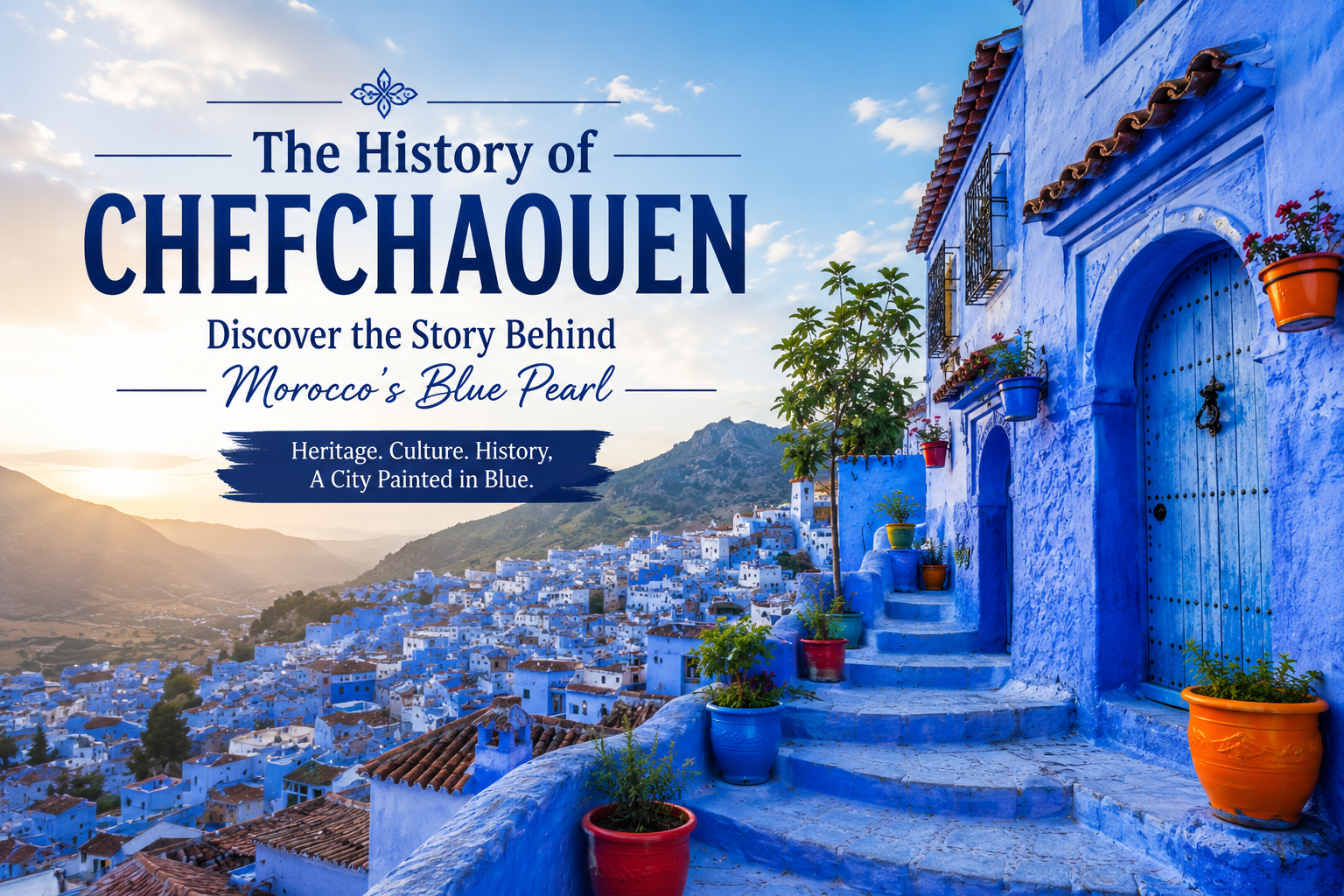
History of Chefchaouen is deeply connected to Morocco’s Andalusian, Berber, and Islamic heritage. Located in the Rif Mountains of northern Morocco, Chefchaouen is famous for its beautiful blue streets, peaceful atmosphere, and rich cultural traditions. Founded in 1471, the city has become one of Morocco’s most iconic and historically important destinations.
In this detailed guide, we explore the history of Chefchaouen from its foundation in the 15th century to its transformation into one of Morocco’s most iconic cities.
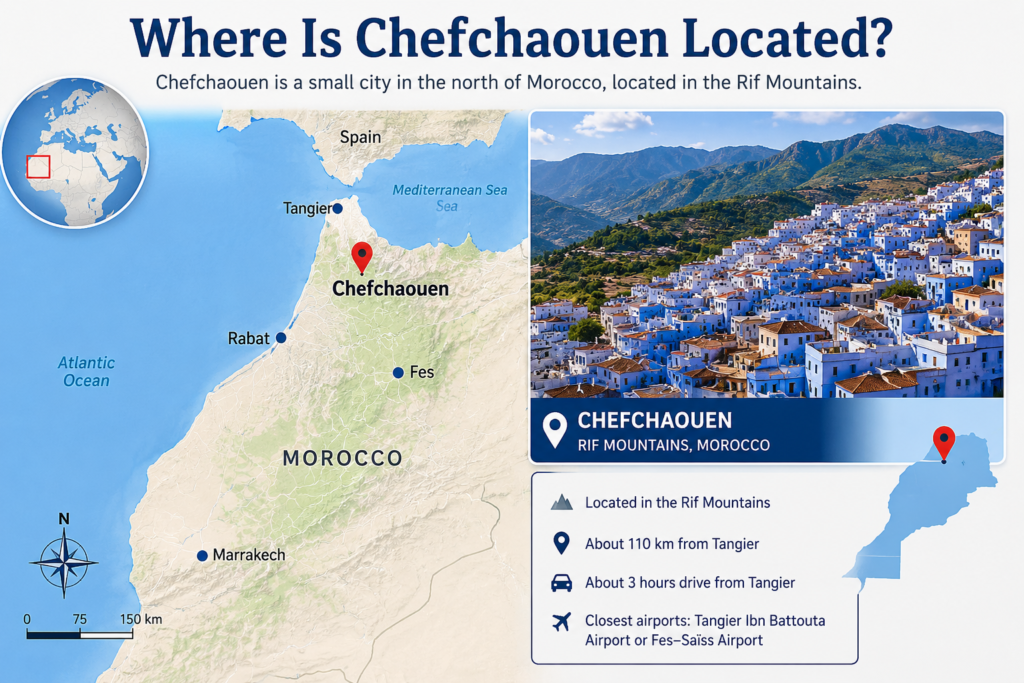
Chefchaouen is located in northern Morocco, between the Rif Mountains, around 110 kilometers from Tangier and close to Tetouan. Its strategic mountain location made it an important defensive and cultural center throughout Moroccan history.
The city’s name comes from the Berber phrase “Ichawen” or “Chaouen,” meaning “the horns,” referring to the mountain peaks that overlook the city.
Today, Chefchaouen is often called:
The history of Chefchaouen begins in 1471 when the city was founded by Moulay Ali Ben Moussa Ben Rached El Alami, also known as Moulay Ali Ben Rachid.
At the time, northern Morocco faced increasing threats from Portuguese forces occupying parts of the Moroccan coast. Chefchaouen was originally built as a fortress and military base to defend the region against foreign invasions.
The city quickly became a refuge for:
This mixture of Moroccan, Berber, Arab, and Andalusian influences helped shape the unique identity of Chefchaouen.
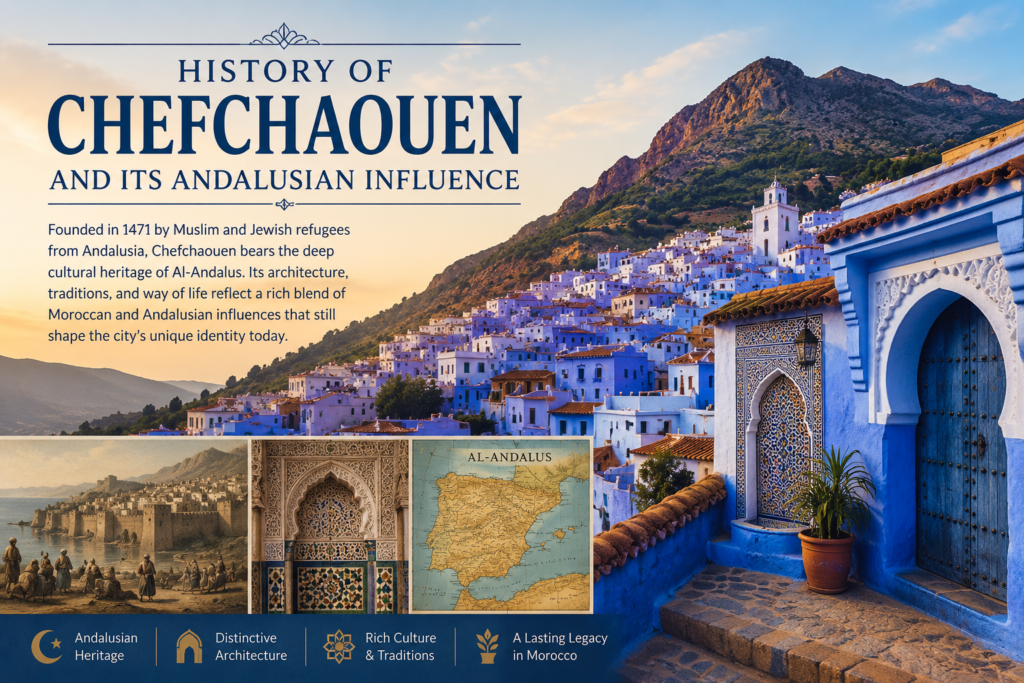
One of the most important parts of Chefchaouen’s history is its deep Andalusian heritage.
After the fall of Granada in 1492, thousands of Muslims and Jews fled southern Spain and settled in northern Morocco. Many of them arrived in Chefchaouen, bringing:
The white-and-blue houses, narrow alleyways, interior courtyards, and decorative details seen today still reflect this Andalusian influence.
Even the relaxed lifestyle and artistic atmosphere of Chefchaouen carry traces of its Spanish-Andalusian past.
One of the most famous questions visitors ask is:
Historians and locals offer several explanations.
Many believe the blue color tradition was introduced by Jewish refugees during the 1930s. In Jewish spirituality, blue represents the sky, heaven, and closeness to God.
Others believe the blue walls help:
Over time, the blue color became Chefchaouen’s signature identity and one of the most photographed sights in Morocco.
Today, the blue streets are a major reason why millions of travelers visit the city every year.
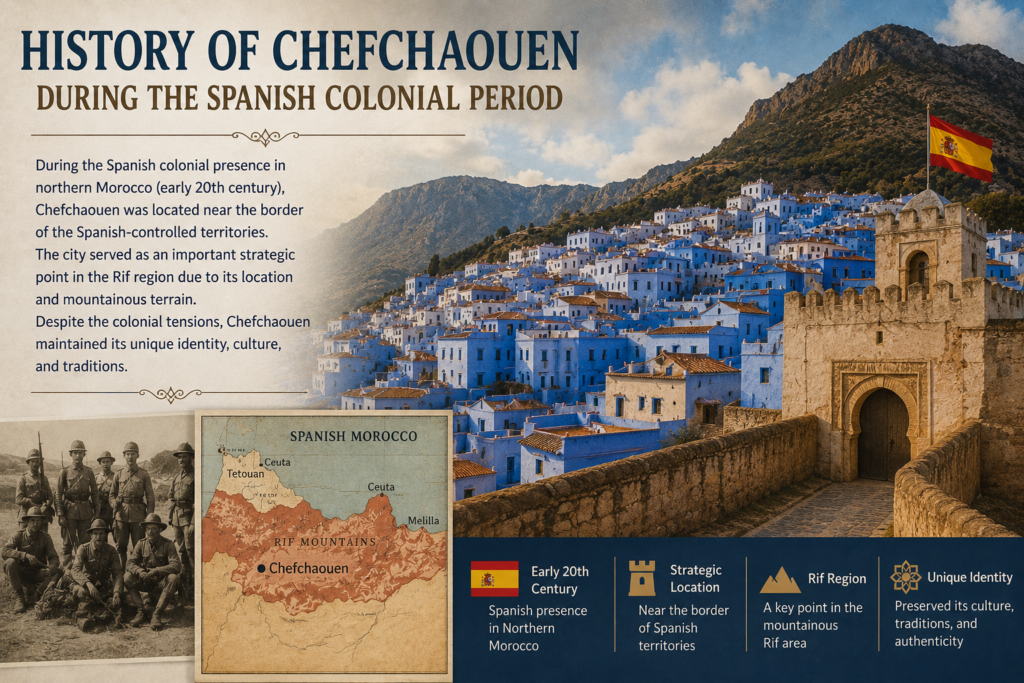
In the early 20th century, Morocco entered a period of European colonial influence. Northern Morocco, including Chefchaouen, became part of the Spanish Protectorate in 1912.
During this period:
However, Chefchaouen also became an important center of resistance against colonial control. The surrounding Rif Mountains were home to resistance fighters led by famous anti-colonial leader Abdelkrim El Khattabi during the Rif War in the 1920s.
This period remains an important chapter in northern Moroccan history.
For centuries, Chefchaouen remained relatively isolated due to its mountain location. This isolation helped preserve its traditions and local culture.
The city is known for:
The medina still reflects traditional Moroccan life, with local markets, bakeries, hammams, and artisans working by hand.
Visitors often describe Chefchaouen as one of the most authentic cities in Morocco.
For many years, Chefchaouen remained a quiet mountain town visited mostly by local travelers and backpackers. However, social media and travel photography transformed the city into an international tourist destination.
Today, Chefchaouen is famous worldwide for:
Travelers from Europe, America, Asia, and the Middle East visit the city every year to explore its beauty and history.
Despite modern tourism growth, Chefchaouen has managed to preserve much of its authentic character and traditional charm.
The historic medina is the heart of the city and one of the best-preserved old towns in Morocco.
Located in Plaza Uta el-Hammam, the Kasbah dates back to the 15th century and contains historical exhibits, gardens, and panoramic views.
Built shortly after the city’s foundation, the Grand Mosque remains one of Chefchaouen’s most important religious landmarks.
Overlooking the city from the mountains, this historic site offers one of the best panoramic views of Chefchaouen.
The best seasons to visit are:
During these months, the weather is pleasant and perfect for walking through the blue streets and mountain trails.
Want to discover the history and beauty of Chefchaouen with experienced local guides?
At Visit Chefchaouen, we organize private tours, cultural experiences, and multi-day trips across northern Morocco.
Whether you want a relaxing day trip or a complete Moroccan adventure, our local team is ready to help you explore the best of northern Morocco.
🌐 Website: https://visitchefchaouen.net/
📧 Email: info@visitchefchaouen.net
📱 Phone & WhatsApp: +212627066567
Contact us today to plan your unforgettable Chefchaouen experience.